![]() |
| Aluminium Fabrication |
#1. Years of Experience
#2. Size of Workforce
#3. Versatility
#4. Equipment Used
![]() |
| Metal Fabricator |
![]() |
| Aluminium Fabrication |
![]() |
| Metal Fabricator |
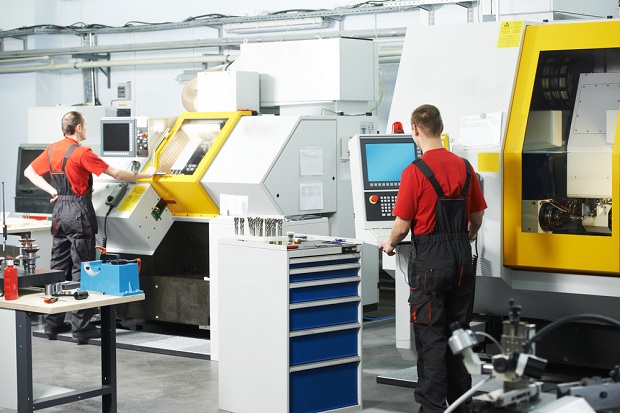
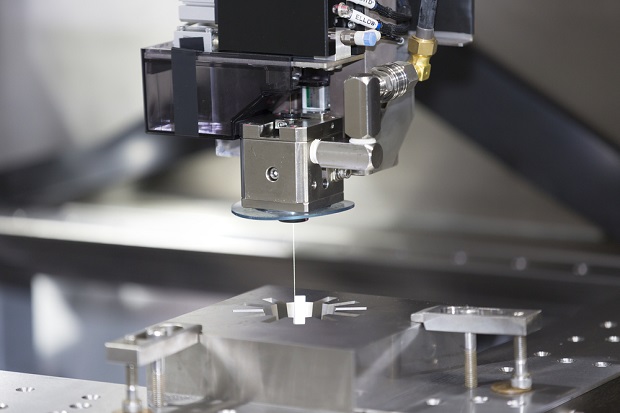
CNC precision machining is known to have contributed to different industries widely. There are several objects that one uses daily which are manufactured with the help of the technique. When it comes to offering a shape to any industry equipment or tools that are used in any factory, this machine, and its technique is of great help. It offers a high-level accuracy for shaping the products because, the machinery employs sophisticated software like the CAD or CAM to get the best and accurate blueprints for further execution.
![]() |
| CNC Precision Machining |
![]() |
| Precision Component |
Several companies have benefitted greatly by employing the use of precision machinery. They are impressed with the efficiency as well as a boost in productivity. At the end of the day, every company looks out to save as much money as possible on the production so that it gains profits. With the help of such technology, it is possible for the company to serve the best and accurate products at the most competitive rates. Dealing with the competitors is also easier as one can handle the projects efficiently irrespective of the deliverable and deadlines.
CNC machining is used in the sector of manufacturing and involves using computers to be able to control tools for machining. Tools like grinders, routers, lathes, and mills are some of the tools which can be controlled with the help of this process. CNC, in other words, is Computer Numerical Control. With the passing of time we find that this type of machining has turned out to be stable for manufacturers, be it on a large scale or a smaller one. Due to the precision possible with the CNC machining this process is able to produce shapes which are termed as ‘complex’ and which, otherwise would have been practically impossible manually. CNC precision machining reduces any chances of human labor, and it also etches out a complete work in less time, thereby enhancing the rate of any industrial production.
![]() |
| CNC Manufacturing |
#1. These machines can be operated continuously, that is 24X7, without any breaks. Probably a down time which is short, is required only for maintenance, thus saving on time.
#2. These CNC machines can produce parts in a short time which, otherwise would have taken a long time if you opt for conventional machining.
#3. Updating these machines is fast as only the software needs to be changed. This helps in quickly moving from making one part to another. These machines also store programs thus it is convenient to reuse these programs if required.
#4. You can say using these machines is an efficient way to create a component as most of these have detectors for quality assurance and the minute a deficiency is detected the production stops, avoiding wastage.
#5. The CNC machines are programmed with a design which is reproduced in the exact manner. This is an important factor in the modern industry where one error is able to render the machine unusable.
#6. There is no requirement of too many workers as once programmed these work on their own. This factor reduces the work load and also the money spent in employing too many workers. Besides which, it is able to ensure safety as harmful tools are not being used.
#7. The efficiency and the speed at which these machines work and also the amount of raw material used, makes it a profitable investment.
#8. A test done visually for all new programs, the designers can make sure of the desired effect.
#9. These are available with cooling systems which are automated, so there is no chance of any damage due to heat.
#10. They are suitable for metal and also plastic parts.
![]() |
| CNC Machining |
Finally, for wood plastics, metal and prototype materials check out the spindle speed. With the above factors taken into consideration it becomes convenient to opt for an apt CNC machine in accordance to your requirement.
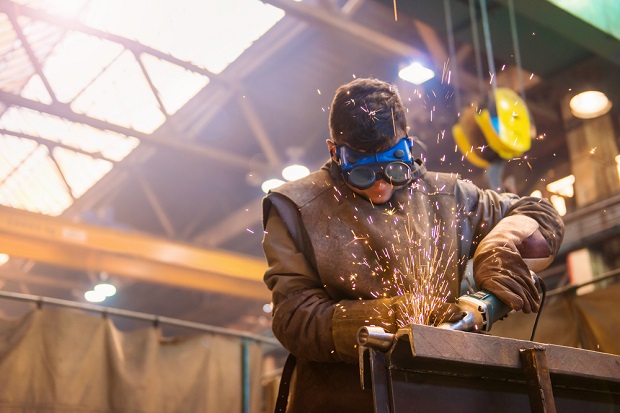
The modern world is often referred to as a metallic jungle because almost every other structure that we see has some or the other metallic component in it and the most commonly used metal here is steel. Now, steel fabrication demonstrates how people can create these unique structures but the important question is what steel fabrication is. In layman definition, steel fabrication is the process of transforming steel from one form to the other for various purposes. Steel is one of the metals, which does not get corroded easily and so materials after steel fabrication are used for domestic purposes as well as for industrial sectors.
![]() |
| Quality Steel Fabrication |
Steel fabrication is not an easy job which is why you need to know it as thoroughly as possible to make sure you don’t miss out on any important step in between.
Structural steel fabrication process is the reason why we get to see some of the most unique structures on the planet. Good examples of structural steel fabrication process include structures like bridges and flyovers which we use almost every day for travelling purposes.
![]() |
| Steel Fabrication Worker |
1. Cleaning Surfaces: the first step of structural fabrication process includes the cleaning of impurities which is needed to be done before moving onto fabrication. Here the most prudent way of achieving the right results is either through the process of blast cleaning or by flame cleaning as per the requirements.
2. Cutting and Machining: as soon as the surface is clean, you will need to cut the steel into correct lengths. There are a number of different methods which you can employ to do this job but these three are known to yield the best results.
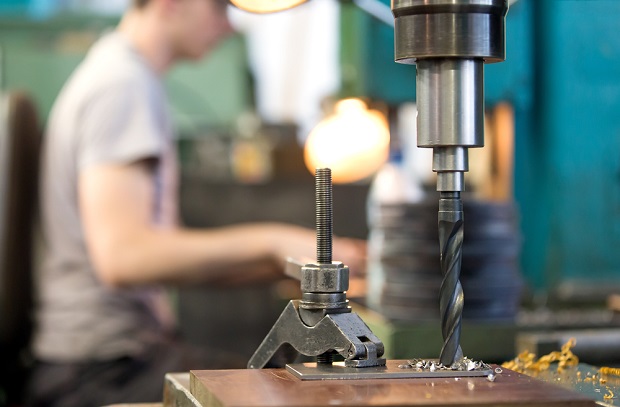
3. Drilling and punching: with the completion of the previous process, we have to concentrate on punching and drilling the metals at the right places. There are a number of different kinds of drills you can use for getting the job done including radial drills. But nowadays, industries are more interested in using NC or Numerically Controlled tools. Drilling and making holes inside the sheet metals are very important and so the fabricator works with the digitally-operated machines. Moreover you can also punch your way through the steel sections which is a process you will see being used when you want squared holes in the sections. This is touted to be a faster process as compared to drilling but is restricted to plates which have smaller thickness only.
4. Straightening and Fitting: Now, it is possible that the steel plates may get distorted at any stage of fabrication, which is what brings us to straightening of such sheets. The straightening of the steel sections will depend on the product which needs the treatment. For example, gag press is something which can be really helpful if you are trying to straighten objects like heavy bars, channels, beam, etc. whereas in order to rectify issues of misalignment, most people opt for either pattern or spot heating. After this, the ancillary products are ready.
Thereafter, they are reamed and fitted together temporarily before the final assembly. In the final assembly stage, you will need to make sure that whatever fastening process you apply should hold the structure intact. The commonly employed methods here include bolting, riveting and wielding. Moreover, you can visit us to know more details about steel fabrication.
Today, the manufacturing industry is in a much advanced stage than any other. This is one field where you can find the latest technological innovations and discoveries. This advancement has surely made man’s job easier and much of the work today is taken up by machines, which has resulted in more accuracy and quality of the jobs done. Of these, CNC machines are definitely one of the most incredible inventions. CNC manufacturing is a process in which computers are used to manage machine tools. CNC is the abbreviation for Computer Numerical Control. Many machine tools can be controlled using the CNC method and they include grinders, mills, lathes and more. Though the process looks as if a normal PC is used for the process, the computer is equipped with distinctive software and control console which are exclusively used for CNC manufacturing process.
![]() |
| CNC Machine |
CNC machining which is used in CNC manufacturing process works as per a numerical control. A software language called G-code is used to create a computer program with the help of which an object is modified and thereby machines are programmed. Various steps for manufacturing such as the organization, position, speediness and feed rate and controlled with the help of the program. CNC process is used in the making of metal as well as plastic parts.
When manufacturing is done by CNC machines, there is higher rate of accuracy and precision. In times of processes that need precision, it is mandatory to use CNC machining. Also, much of the manual labor costs are reduced, because the machine removes the completed job on its own and even takes on the next one. Thus, once the programming code is fed into it, the machine has the capacity to manufacture 24 hours and more.
![]() |
| CNC Manufacture |
The way a CNC machine works can be explained in 5 simple steps.
To ensure safety, a guard is used so that if any case, the material comes off, no one is hurt. The motor will start only if the guard is in place. Once all these steps are checked, the CNC is switched on. The desired shape is done. This is how easy the cutting process is made with the help of CNC machines.
So, these are the procedure and advantages of CNC machining. Visit us if you want to know more information about it.
Whether it is for drilling, milling or lathes; CNC machining has now become the benchmark in manufacturing industry. CNC stands for Computer Numerical Control. It is a machine with a computer attached to it. This computer operates the machine. All you need to do is to feed the commands or the tasks that you want the machine to do through computer through programming. The computer is provided with a keyboard through which you can program it. The entire job such as cutting the metal to required shape is done by the machine depending on the parameters that you feed in the computer. Since manufacturing industry requires high precision in jobs such as drilling or milling, making complex parts, providing threads, slots, holes or chamfer etc. CNC machines are quite popular. In fact, using premium CNC machining has become mandatory in some areas of manufacturing.
![]() |
| CNC Manufacturing |
Since it is controlled by a computer, you do away with the operator and this reduces the human error that might otherwise creep into an operator controlled machine. The operator only has to feed the program and the raw material into the machine. CNC machines do not require continuous monitoring either. You only need to ensure that you have fed the right commands, loaded the tools correctly and that raw material is being made available. The machines keep the machined parts as desired after completion of job and then pick up the next one on their own.
CNC machines are very flexible since you only have to reprogram the unit to perform the desired task. The computational ability is much more than a human operator. It is more like a robot that is working at your command.
Common CNC machines include horizontal lathe, vertical lathe machine, vertical machining centre (three axis or five axis), milling machine. Apart from handling metals such as steel, aluminum or non ferrous metals, CNC machines can also handle plastics. Mould making, making signs, milling for printed circuit boards in electronics industry, making 3D models, wood processing etc. are some other areas of application of premium CNC machining.
![]() |
| CNC machining |
You can find the use of CNC machines in almost all manufacturing segments – particularly the ones handling precision parts. For instance, CNC machines are used for complex architectural models in 3D, models using PVC, polystyrene, aluminum, engravings on brass, glass, aluminum, steel, wood , engraving different kinds of fonts or thinning of fonts for making stamps, engraving on wood, making designs and chamfers on wood, milling of front plates on electronic items such your CD player, drilling holes on PCB, drilling and making panels, producing prototype PCBs, cutting of foam, rubber, plastics, plasma cutters for cutting steel, are just some of the areas of applications of CNC machines.
CNC machines now use highly automated systems with computer aided design and manufacturing. The common programming language used to feed code is known as G-Code which controls the input of raw materials, coordination amongst various tools, speed of processing etc. Some manufactures of CNC machines provide their own proprietary code that is simple than the G-code. However, these proprietary codes cannot be used on machines of different manufacturers.
Premium CNC machining ensures that you are able to do your job with complete accuracy, no matter how complex the job might be. Moreover, you can go through this link to know more about the premium CNC machining.
![]() |
| Precision Engineering |
OZ Information Hub © 2015 - Templateism.com